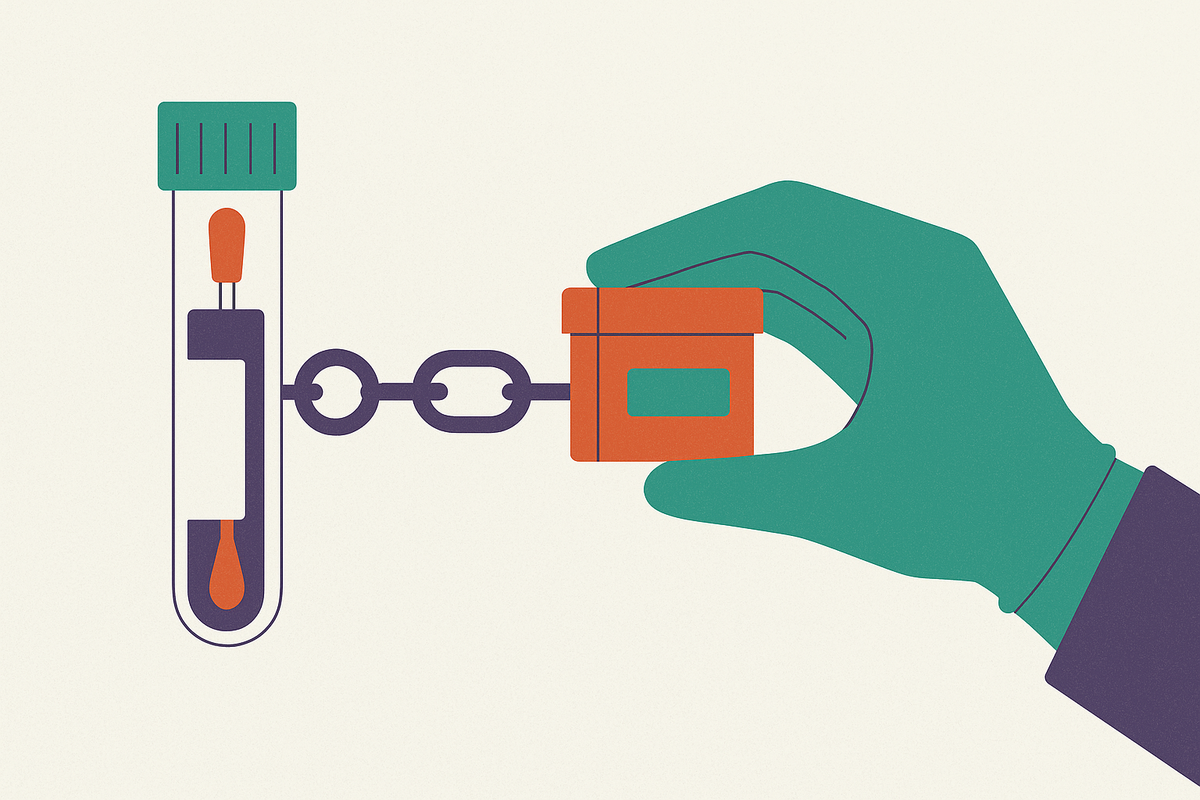
Cold-Chain Custody for Allergen Extract Vials
Tighter cold-chain custody prevents potency loss in patient-specific allergen mixes.

Allergenic extracts are biologics. That distinction gets lost in most operational conversations until something goes wrong, usually a vial that sat too long on a porch in August. USP General Chapter <797> and the manufacturer package inserts for standardized extracts, short ragweed, dust mite, cat hair, the usual panel, all specify storage at 2°C to 8°C, and potency degrades on a curve that doesn't forgive sloppy handling. A vial that spends six hours at room temperature during a delivery mishap hasn't necessarily failed. Nobody can say for certain that it hasn't, either, and that uncertainty is the whole problem.
Compare this to an antibiotic. A short excursion there usually has a documented stability margin someone can point to, a number from a real study. Allergen extract stability data is thinner, more product-specific, and often locked up as proprietary manufacturer information that never makes it into a pharmacy's standard operating procedure. Allergists already build around this uncertainty, which is why most immunotherapy protocols call for a potency reduction and a slower buildup schedule when a patient restarts after any gap in dosing. Doesn't matter if the gap came from a heat excursion or just three missed weeks over the holidays. The protocol treats the uncertainty the same either way.
Compounding pharmacies mix these extracts into patient-specific vials, sometimes blending ten or more allergens into a single treatment set. That mixture carries its own stability profile, generally shorter than the stock concentrate it came from. The clock starts the moment compounding happens, well before the box arrives or the patient opens the lid.
Four Owners, Four Chances to Lose the Thread
Compounding pharmacy, carrier, patient, and, in a remote program, a clinical team watching from somewhere else entirely. Each handoff between these parties is a place where custody, and the accountability that rides with it, can slip without anyone noticing until later.
The pharmacy's job sounds simple on paper: compound to order, cold-pack for shipment, generate a lot number and an expiry date tied to that exact vial set. In practice, this is where the paper trail gets built correctly or doesn't get built at all. A pharmacy that issues a flat 90-day expiry without accounting for the patient's actual dosing cadence is setting up waste at best. At worst, it's setting up a patient to keep drawing from a vial long past the point anyone can vouch for what's actually still in it.
Shipping is the part everyone worries about, yet it's gotten easiest to monitor. Cold-chain carriers running temperature-tracked allergen and biologic freight now routinely tuck a data logger into the package, sometimes a color-change strip, sometimes a Bluetooth logger that syncs to an app the second the box gets opened. The technology stopped being the bottleneck a while ago. The bottleneck is whether anyone downstream actually opens the app and reads the data before the patient draws a dose.
Then the vial lands at the patient's door. This is the least controlled link in the whole chain by a wide margin, and it's the one most programs would rather not talk about. A logger can tell you the box sat at 12°C for forty minutes on a porch in July. It cannot tell you whether the patient's kitchen fridge holds a steady 4°C or swings between 1°C and 9°C every time somebody grabs the milk. Remote programs that don't address this link are running a cold chain they genuinely cannot see for the last ten feet.
Three Records, Not One System
Tracking excursions isn't a single dashboard. It's three overlapping records, and they have to reconcile with each other or the whole exercise is theater. A program can have a beautiful dashboard, green lights across the board, and still be shipping vials nobody can vouch for.
Start with the shipment log: time-stamped temperature data from pharmacy pickup to residential delivery. Programs that take this seriously set a hard excursion threshold, often anything above 8°C for more than sixty minutes, or any dip below freezing at all, and they treat a breach as an automatic hold. The vial doesn't get used until someone with clinical authority signs off on the actual logger data. "Probably fine" isn't a clinical standard anyone would defend in front of a patient's allergist, and it shouldn't have to be said out loud, but it does.
Second is the expiry ledger. This sounds like a paperwork detail until you realize how many programs blow it by slapping one expiry date on an entire vial set instead of recalculating from actual dispense date, dilution, and the specific extract's documented stability window. A vial compounded on a Tuesday and shipped the following Monday does not have the same shelf life remaining as one shipped same-day. Programs with real custody discipline back-calculate expiry from the compounding date, never the shipment date, and they flag anything approaching expiry before the next scheduled dose, not after.
Third, and this is the one nobody talks about at conferences, is the re-dispense record. Treatment plans change constantly in immunotherapy. Doses get adjusted, patients pause for pregnancy or illness, allergen panels get revised after a follow-up skin test comes back different. Every one of those changes should trigger a brand-new vial with its own custody chain starting from zero. A program that reuses an old expiry date on a reformulated vial because it's "basically the same treatment" has broken the chain. Often nobody notices until a patient reports a reaction that shouldn't have happened at all.
The Refrigerator Problem Doesn't Have a Clean Fix
Programs have tried a handful of workarounds. None of them close the gap fully, and it's worth being honest about that instead of pretending some vendor's app solved it.
Some ship a compact logger alongside the vial and ask the patient to place it in the fridge and check it periodically through an app. Compliance is inconsistent, because patients aren't lab techs. They think in terms of "is my medicine in the fridge, yes or no," not in terms of cumulative time above threshold. Others lean on patient-reported excursions, essentially an honor system where the patient calls in if the fridge died or the vial sat on the counter too long. That works right up until it doesn't, and it never scales to a program running thousands of patients at once.
The more defensible approach, and the one better-run remote immunotherapy programs have actually moved toward, treats the home refrigerator stage as an assumed-risk zone rather than a monitored one. Instead of chasing pharmacy-grade monitoring inside someone's kitchen, the program front-loads the mitigation: shorter expiry windows that assume some home-storage variability, smaller vial volumes shipped more often so less product is ever at risk at one time, and repeated patient education on the visual cues, cloudiness, particulate, an off color, that should trigger a phone call before the next dose rather than after a reaction.
Shorter expiry and smaller shipments mean more shipments. More shipments mean more cold-chain events and more cost, full stop. Programs trying to save money by stretching expiry windows or bulk-shipping bigger vial sets are simply pushing that saved cost onto risk they can no longer track. Nobody has published a clean cost-benefit study specific to allergen extract cold chains, which is a little maddening given how long remote immunotherapy has been operating at scale, but the logic tracks with what's already known about cold-chain risk across biologics generally. Tighter monitoring costs more upfront. It catches more before it reaches a patient.
This Belongs to Clinical Staff, Not Logistics
The instinct at a lot of remote care organizations is to hand cold-chain tracking to the operations team and file it under shipping. That's a mistake, and a common one. Every excursion threshold, every expiry recalculation rule, every call on whether a vial gets discarded or held for review is, underneath the mechanics, a clinical judgment about acceptable risk to one specific patient's immune response. The pharmacist compounding the vial and the allergist managing the buildup schedule need to be the ones setting those thresholds. Logistics should execute against clinical specification. Plenty of programs still run it exactly backward, setting policy in the shipping department and informing clinicians after the fact.
The programs that get this right tend to have one clear operational owner, usually a clinical pharmacist or a program director, who reviews excursion holds daily and holds actual authority to tell a patient not to dose pending a re-ship. The programs that get it wrong review these things retroactively, in a spreadsheet, weeks after the vial already got used, by which point the only thing left to document is the reaction.
Daily review with real authority carries far more weight than a spreadsheet audit conducted after the fact. That gap marks the whole distance between a program patients and allergists can actually trust and one that has simply avoided a bad outcome so far.